
Loft conversions are becoming an ever more popular solution to increasing the livable space in our homes. The new room they create can be used as a bedroom, office space, games room, or pretty much anything you can imagine. But loft conversions can also be a great opportunity to improve the energy efficiency of your home and live a greener lifestyle. And one of the ways you can do this is through installing solar panels in your loft conversion roof. Installing solar panels during a loft conversion is very possible and, in some ways, it can be easier than having solar panels installed on an existing roof.
Solar panels have been around for a few decades but they are becoming a more popular and commonplace sight on people's homes.
They work by converting the sun's energy into electricity using photovoltaic (PV) panels. These panels are usually made from silicon (or another semiconductor material) encased in a metal frame with a glass front.
When photons of sunlight hit the panel, they release electrons and produce an electrical charge. This charge is then captured in electrical wiring. The direct current (DC) electricity is converted into alternating current (AC) electricity which can then be used in home electrics.
Installing solar panels can give you a wide range of benefits. The sun is a renewable energy source and solar panels are designed to take advantage of that.

When you install solar panels, you can use the electricity they generate to power your home. This results in a reduction in your energy bills.
On average, you can expect to see your energy bills decrease by between 50% and 70%.
Many people are looking at how they can reduce their carbon footprint and live a greener lifestyle. Because solar panels use a renewable energy source and they result in you using fossil fuel energy, they will reduce your carbon footprint.
The IPCC estimates that the carbon footprint used by solar panels is 12 times less than natural gas and 20 times less than coal.
Solar panels are a sound investment. The average cost of solar panel installation is £7,000 (the price will depend on the number of panels fitted and other factors). And they require almost no maintenance. Most solar panel installers will provide 25-year warranties. So after that initial investment, they pretty much run themselves.
The cost of solar panels used to be prohibitive. They were very expensive when they were first developed. With new technological advancements, however, their price has reduced by around 70%.
The original solar panels were not the prettiest creations and there is no doubt that this (along with the high cost) put a lot of people off.
Things have changed dramatically, however. Nowadays, solar panels are much more aesthetically pleasing.
Their look can be sleek, sophisticated, and contemporary. You also have a lot more scope for design choices, including:
Solar panels can increase the value of your property. There is some debate about how much with some experts saying that you'll likely only achieve extra market value in the future and others stating that you can see an immediate increase by anything from 4% to 25%.
It is easy to see why solar panels would increase your home's value because they are an attractive option for buyers. They will see the solar panels and understand that they will mean lower energy costs and a lower carbon footprint.
Solar panels will certainly improve the EPC rating of your home. This is the Energy Performance Certificate and it displays how energy efficient your home is on a scale of A to G. And a higher EPC rating is associated with a higher market value of a property compared to other similar properties.
The roof of your loft conversion can have solar panels installed in it. And, in fact, there are lots of benefits to having solar panels installed during your loft conversion.
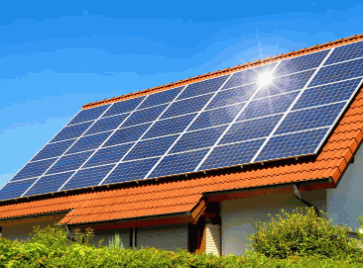
Installing a solar panel system at the same time as a loft conversion can help you save on the costs of both. For example, you will only need to hire scaffolding once.
If you install solar panels during your loft conversion, you can design your conversion to better incorporate the panels. When you install PV solar panels on an existing roof, you have to work with the slope and alignment that you already have.
If, however, you incorporate solar panel installation into your loft conversion design, you can have much greater control over the panel placement. This can allow you to maximise the energy gains that you get from solar power.
Improving your energy efficiency by installing solar panels doesn't have to be the only way that you make your loft conversion more green. You can incorporate other elements that will boost your energy efficiency even further.
There are strict guidelines about insulation in loft conversions as it is. They will usually, for example, need to achieve a U-value of 0.18W/m2k. The U-value measures how effective the insulating materials are.
You can aim for a much better U-value than is strictly needed by the guidelines if you want to ensure that your loft conversion helps to save on your energy costs and reduce your carbon footprint.
You can also choose to use natural and renewable materials for your insulation, such as cork and straw to further reduce your carbon footprint.

If you currently have an old boiler system in your loft, you can use your loft conversion as an opportunity to install a greener and more energy-efficient boiler system, such as a condensing system.
An A+ rated energy efficient boiler can save you 30% on your energy bills. All modern condensing boilers are required to be at least 92% efficient. This means that for every unit of fuel it consumes, 92% will be usable energy. So it reduces how much energy you lose.
Losing less energy coupled with making your own energy will mean that your energy bills will be reduced dramatically.
To further increase the eco-friendliness of your loft conversion, you can:
Solar panels can be installed on all types of loft conversion but some types will allow you to maximise energy generation more than others.
This type of loft conversion doesn't alter your roof at all. Instead, modifications are made inside to create an additional living space, and large roof lights are added to the roof.
You can install solar panels in a roof light loft conversion in just the same way as you would on a normal roof. You will be constrained by the slope and design of the original roof because this won't be altered.

A dormer loft conversion is a box-like structure that projects from a property's existing roof line and it usually results in a flat roof.
A flat roof is a great option for solar panels. The panels will be fully facing the sun throughout the day and will not be in shadow at any point.
A larger dormer conversion, such as an L-shaped conversion, will allow for additional panels to be installed to fully benefit from the sunlight.
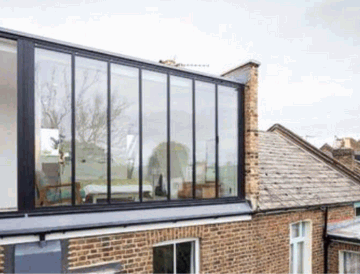
This type of loft conversion is usually seen on semi-detached houses and involves modifying the hipped side of the roof into a gable.
The new sloped roof can be a blank canvas that will hold multiple solar panels. This can be especially functional if the slope is south-facing.

A mansard loft conversion is the most extensive type. You can think of it as adding a whole new storey to the house and it involves changing the sloping side of the roof to an almost vertical wall.
The resulting new roof is usually a flat roof and its footprint is the same as the house below. This means that you will get maximum space for installing solar panels, all of which will directly face the sun throughout the day.

Incorporating solar technology into your loft conversion can be a relatively simple process, although navigating the coordination of both aspects of the installation can be helped by your professional installer. At the Loft Crew, if you choose to install panels with your loft conversion, we will work closely with the solar panel installation company to make sure that the project gets completed without a hitch.
During the planning stage, both the loft conversion company and the solar panel installation company will work closely together to create a plan for the loft build that incorporates the solar panels in the best way.
This stage will include plans for loft conversion type, solar panel number, solar panel placement, roof slope angle, and more.
It may also include other energy efficiency measures that you wish to incorporate into your loft conversion.
Once the plan is in place, the loft conversion construction will be completed in line with the developed plans. The roof will be constructed ready to hold the solar panels and any other energy efficiency measures will be put in place.
Dig deeper: How Do You Know If You Can Have A Loft Conversion

Once the loft conversion is completed, the solar panels will be installed in line with the plans. This can be done immediately following the loft conversion construction, which will help to reduce installation costs.
Once the loft conversion is constructed and the solar panels are installed, the project will be inspected to ensure that it is completed to the highest quality.
In most cases, neither loft conversions nor solar panels will require planning permission before work can go ahead. They will both usually come under permitted development rights which allow homeowners to make alterations to their homes without needing permission from the local planning authority.
In some cases, however, planning permission will be needed. For example:
Find out more: Do You Need Planning Permission For Loft Conversions
Even if your loft conversion doesn't need planning permission, it will still need to be completed in line with building regulations and receive a completion certificate from building control.
If your property shares a wall with any other property, you will usually need a party wall agreement from your neighbours before work can go ahead.
Learn more: Do I Need A Party Wall Agreement For Loft Conversion
If you are looking into getting a loft conversion and also want to create a more energy-efficient future, then installing solar panels can be an effective solution. We can help you to navigate the planning of a loft conversion plus solar panel installation and will work closely with the solar panel installation company at the planning, construction, and inspection stages. We will also help you with any necessary planning permission applications, as well as the building regulations and party wall agreement processes.

Creating your own energy through the use of solar panels doesn't just save on your energy bills, but it can also greatly reduce your environmental impact. A loft conversion installation is the perfect time to install solar panels because you can reduce your installation costs and have more control over the design and placement of the solar panels.


